
Surface Drainage
Surface Drainage & Catch Basin
Installation in Cincinnati, Ohio
Standing water in your yard after every rain isn't normal. It's a sign your surface drainage isn't working. We fix it.
Standing Water Is More Than an Inconvenience
A swampy yard after rain feels like a nuisance. But standing water is telling you something important — your property has more water than it can absorb or move, and that water is looking for somewhere to go.
In most cases it finds your foundation. Water that sits on the surface long enough saturates the surrounding soil. Saturated soil creates hydrostatic pressure against your foundation walls. That pressure is what causes cracks, moisture infiltration, and long-term structural damage.
Surface drainage systems and catch basins solve this by intercepting water at ground level before it saturates the soil. Water enters the system, travels through underground pipes, and discharges safely away from your home.
Signs Your Property Needs Surface Drainage
Surface drainage problems show up in predictable ways. If you recognize any of these on your property, a catch basin or surface drainage system is likely the right fix.
Water Standing in Your Yard After Rain
If water pools in the same spots in your yard after every rain and takes hours or days to absorb, your soil is saturated and has no drainage path. A catch basin gives that water somewhere to go immediately.
Soggy or Spongy Lawn
A lawn that feels soft or spongy underfoot long after rain has stopped is holding more water than it should. That moisture is not only damaging your lawn — it's sitting close to your foundation and keeping the surrounding soil saturated.
Water Running Across Hard Surfaces Toward the House
Driveways, patios, and walkways shed water quickly. If those surfaces slope toward your home, that runoff flows directly at your foundation with no soil to absorb it along the way. A surface drain or channel drain intercepts that flow before it reaches the house.
Erosion Channels in the Yard
If rain carves visible channels or ruts through your yard, water is moving across the surface faster than the ground can absorb it. Those channels indicate both a volume problem and a slope problem. Surface drainage controls the flow before it causes further erosion.
Flooded Window Wells
Window wells that fill with water during rain indicate that surface water is flowing toward the foundation and collecting in low points around the house. A window well drain or nearby catch basin prevents water from accumulating there.
Water in the Garage or on the Patio
Water entering a garage under the door or pooling on a patio is a surface drainage failure. The grade or drainage around those surfaces is directing water inward rather than away. A surface channel drain installed at the entry point stops water before it gets inside.
Two Surface Drainage Solutions
Depending on where water is collecting and how it's moving across your property, we'll recommend one or both of these systems.
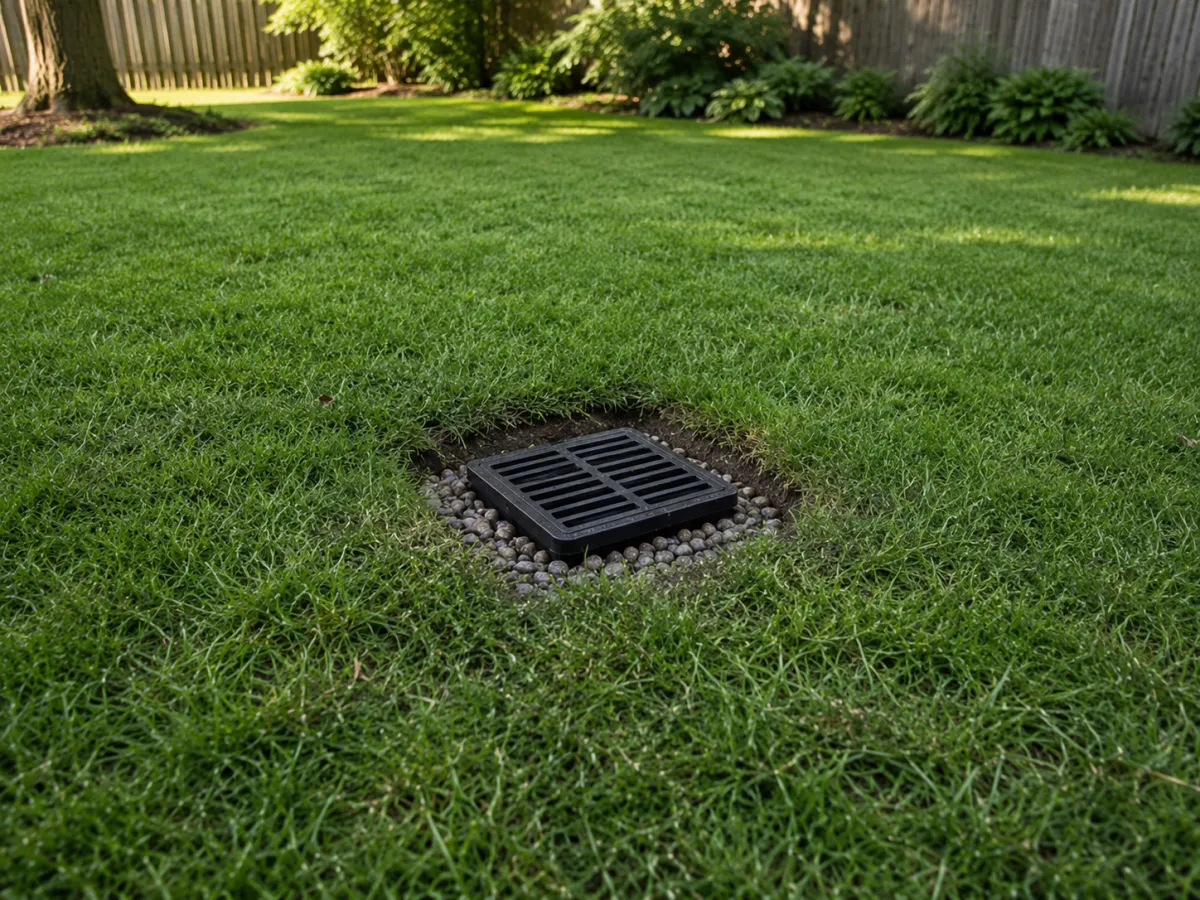
Catch Basins
A catch basin is a underground collection box with a grate at ground level. It sits at the lowest point of a drainage problem area and collects water as it flows across the surface. The collected water drains through an underground pipe to a safe discharge point away from the home.
Catch basins are ideal for low spots in yards, areas near downspouts, and locations where water consistently collects after rain.
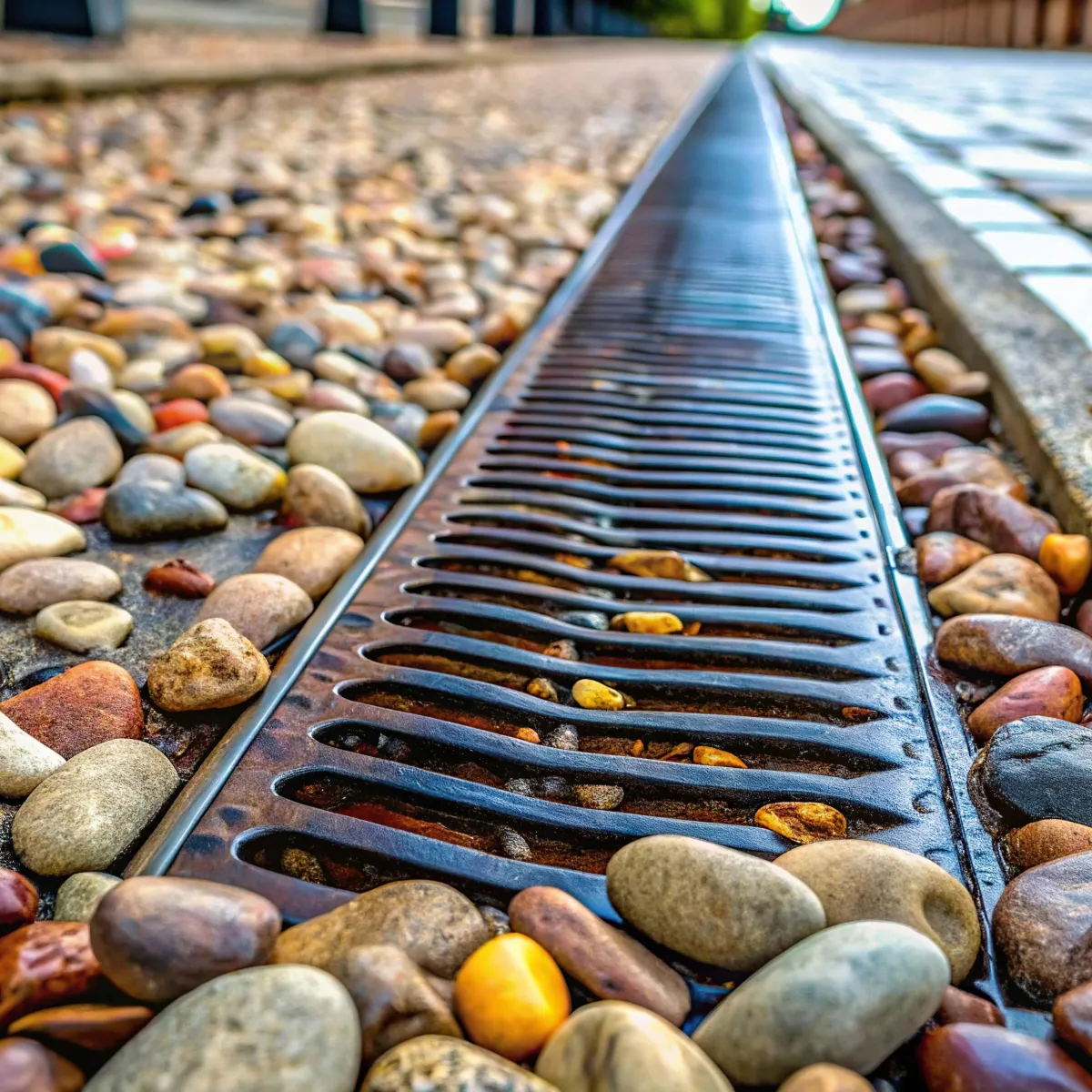
Channel & Trench Drains
A channel drain is a long narrow drain installed at ground level along driveways, patios, garage entries, or any hard surface that sheds water toward the home. It intercepts surface runoff across the full width of the problem area and routes it underground to a discharge point.
Channel drains are the right solution when water flows across a large surface rather than pooling in a single spot.
How We Install Surface Drainage
Every installation is designed around your specific property and where water is moving.
STEP 1:
We Find Where Water Collects
We walk your property and identify every low point, problem area, and surface where water pools or flows toward the house. We map out where catch basins or channel drains need to be placed.
STEP 2:
We Install the System
We excavate, set the catch basin or channel drain at the correct depth and elevation, connect the underground drain line, and route it to a safe discharge point at the edge of the property.
STEP 3:
We Restore the Area
The area around the installation is backfilled, compacted, and restored. The only visible element is the grate at ground level — flush with the lawn or surface so it doesn't interfere with the yard.
No More Standing Water. No More Soggy Yards.
F. A. Q.
Surface Drainage Questions
How much does catch basin installation cost in Cincinnati?
Catch basin installation costs depend on the number of basins, the length of drain pipe, and the complexity of the discharge point. Most single catch basin installations range from $800 to $2,500. We provide a free on-site assessment and quote before work begins.
Where does the water go after it enters the catch basin?
Water flows from the catch basin through an underground solid drain pipe to a discharge point — typically a pop-up emitter at the edge of the yard, a storm drain connection, or a daylight outlet that releases water away from the property.
Do catch basins require maintenance?
Catch basins should be inspected once or twice a year and cleared of debris — leaves, sediment, and dirt — that collects in the basin. This is a simple job that keeps the system flowing freely. We can walk you through it during the installation.
Can a catch basin handle heavy rainfall?
A properly sized catch basin handles normal to heavy rainfall for most residential applications. For properties with very large surface areas or extremely high runoff, we may recommend multiple basins or a larger system. We size the solution to your specific drainage volume during the assessment.
Contact Us Today
We'll assess your property and tell you exactly what it takes to keep the water moving — at no cost and no commitment.

About Us
Flood Foundation installs exterior drainage systems that protect Cincinnati homes from water damage. We control the water before it reaches your foundation. We're a local Cincinnati company built on one idea — fix the drainage problem outside so it never becomes a basement problem inside. Serving Greater Cincinnati and surrounding areas.
Quick Links

